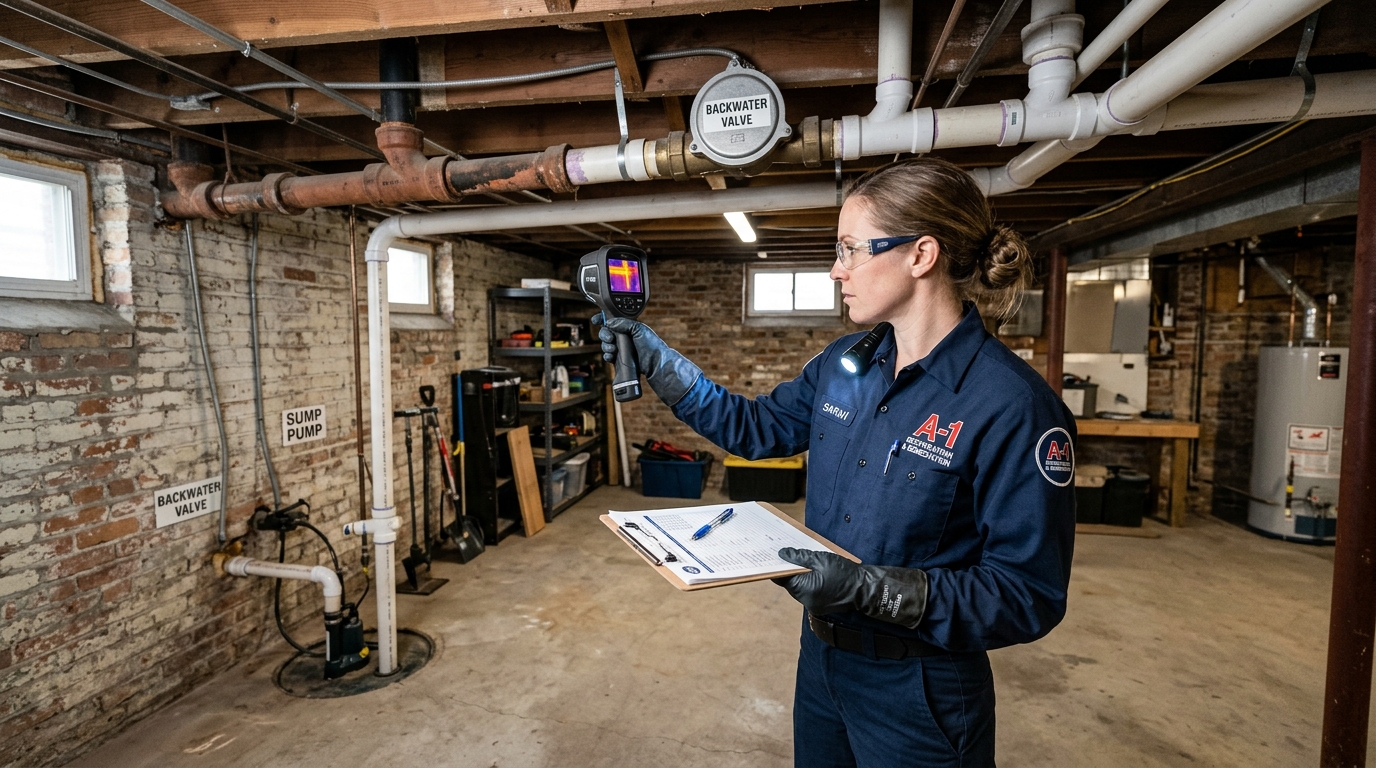
⚡ AEO QUICK ANSWER: Illinois Senate Bill 3925 (Public Act 104-0834), enacted into law by Governor J.B. Pritzker, authorizes Chicago’s Northwest and Southwest Home Equity Assurance Programs to launch a targeted 3-year flood remediation rebate initiative. Eligible homeowners residing in designated Northwest and Southwest Side districts can claim a 50% matching reimbursement—up to $1,000 per household—for documented flood extraction, structural drying, and sewer backflow prevention installations. Enacted to bridge the gap left by denied federal disaster relief, this program requires property owners to provide itemized contractor invoices, psychrometric moisture logs, and proof of completed professional remediation.
🏛️ Legislative Breakdown: How SB 3925 Fills the Post-Flood Funding Gap
Torrential convective downpours across Cook County routinely overwhelm the Metropolitan Water Reclamation District (MWRD) combined sewer network, forcing wastewater into subterranean living spaces. When recent federal disaster assistance requests were denied for Illinois homeowners, Springfield lawmakers acted to unlock local resources.
Sponsored by State Senator Robert Martwick and Representative Lindsey LaPointe, Senate Bill 3925 amends the Illinois Home Equity Assurance Act. The legislation permits home equity assurance governing commissions in cities with more than one million residents—exclusively applying to the City of Chicago—to allocate existing reserve funds toward residential flood recovery.
Under the statute, participating commissions may offer a temporary, three-year rebate program covering 50% of verified remediation expenses up to a maximum cap of $1,000 per household. Unlike standard municipal loan programs, this rebate provides direct reimbursement to property owners who have suffered catastrophic subterranean water ingress or installed preventative mechanical defenses.
📍 Geographic Eligibility: Northwest & Southwest Chicago Districts
The relief provided under SB 3925 is specifically restricted to property owners located within established Chicago Home Equity Assurance districts. These territories comprise thousands of historic brick bungalows and two-flat residences constructed over century-old vitrified clay sewer laterals:
- Northwest Home Equity Assurance Program (NWHEAP): Homeowners in Portage Park, Belmont Cragin, Dunning, Jefferson Park, Norwood Park, Edison Park, and Irving Park should consult NWHEAP district boundary maps to verify parcel enrollment.
- Southwest Home Equity Assurance Program (SWHEAP): Residents throughout Garfield Ridge, Clearing, West Lawn, Ashburn, and Chicago Lawn fall within the southern assurance corridor.
Because these districts operate as independent local governing bodies funded by dedicated property tax levies, funds are directly administered by each program’s board rather than through general city revenues.
🔧 Reimbursable Services: What Qualifies for the $1,000 Rebate?
To qualify for reimbursement under SB 3925 guidelines, expenses must address direct storm-related subterranean water intrusion or install physical barriers against future municipal main surcharge:
- Immediate Water Removal: Industrial pump-outs and truck-mounted Emergency Water Extraction to evacuate pooled stormwater or perched groundwater.
- Biohazard Decontamination: Category 3 Sewage Backup Cleanup from surcharged street mains, including the sanitization of concrete floor slabs, drain cleanouts, and mechanical equipment.
- Moisture Control & Remediation: Comprehensive Basement Flood Cleanup and industrial Structural Drying adhering to IICRC S500 restoration standards to stop mold growth.
- Hard Surface Restorations: Targeted high-static pressure drying systems such as Hardwood Floor Drying to salvage warped subfloors and framing.
- Mechanical Backflow Defenses: Plumber installation of dual-flap check valves, backwater valves, and secondary battery-powered sump pump backup assemblies.
Program Stacking Tip: Chicago homeowners can combine SB 3925 rebates with the City of Chicago Department of Water Management’s Basement Flooding Partnership, which covers up to 50% ($4,000 max) of permitted overhead sewer installations.
🛡️ Step-by-Step Homeowner Safety & Documentation Protocol
Assurance commissions require thorough forensic proof before issuing rebate checks. If your basement experiences water intrusion, follow this 5-step protocol:
- De-Energize Safely: Never step into standing water. Switch off the main electrical breaker only if the panel can be accessed safely from dry footing.
- Halt Domestic Water Usage: Cease operating washing machines, dishwashers, and second-floor showers immediately to prevent personal wastewater from adding to lateral line backpressure.
- Capture Comprehensive Visual Evidence: Photograph waterlines against drywall, submerged furnaces, damaged floor drains, and affected personal property prior to water removal.
- Hire Certified Restoration Professionals: Engage a licensed, IICRC-certified firm capable of producing itemized scopes of work, digital moisture mapping, and formal paid receipts that meet assurance audit standards.
- Submit Paid Invoices to Your District Board: File your rebate claim package through NWHEAP or SWHEAP alongside contractor certifications and insurer documentation.
🚨 24/7 Rebate-Ready Emergency Flood & Sewage Extraction
Chicago Water Emergency provides continuous rapid response across all Northwest and Southwest Side neighborhoods, with guaranteed 30 to 45-minute on-site arrival. Our field supervisors deliver comprehensive documentation packages—including psychrometric drying logs and thermal imaging reports—specifically formatted for insurance carrier claims and municipal rebate verification.
- 24/7 Emergency Dispatch Center: (844) 213-6249
- Zero Out-of-Pocket Direct Insurance Billing: We coordinate directly with your carrier and supply audit-ready invoices to maximize your SB 3925 reimbursement.