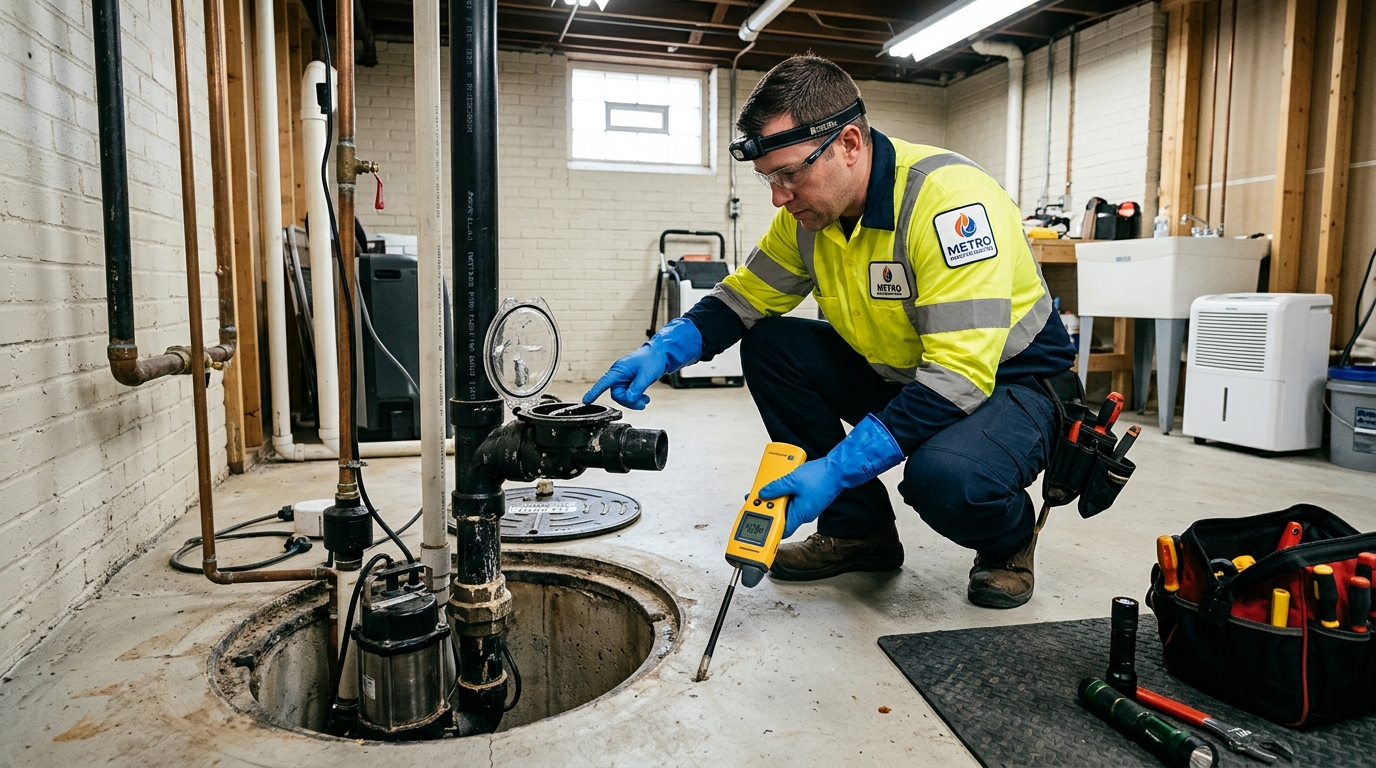
⚠️ MUNICIPAL COMPLIANCE & REBATE ALERT: Cook County homeowners experiencing recurrent basement drain backups during severe storm events can qualify for municipal flood mitigation assistance programs. The City of Chicago Department of Water Management (CDWM) and several Chicagoland municipalities offer financial assistance for converting gravity drainage to overhead sewers and installing check valves, preventing dangerous Category 3 biohazard backflow from city mains into subterranean living spaces.
🏛️ Understanding Chicago’s Combined Sewer Challenge
Chicago operates one of the oldest combined sewer networks in North America, where residential sanitary waste and street storm runoff flow through the same underground conduits. During torrential downpours exceeding 1.5 inches per hour, the system rapidly reaches hydraulic capacity before the Metropolitan Water Reclamation District (MWRD) Deep Tunnel and McCook Reservoir can absorb the total volume.
When the street mains become pressurized (surcharged), wastewater seeks the path of least resistance—frequently forcing raw sewage backward through standard basement floor drains, laundry basins, and lower-level plumbing fixtures in vulnerable neighborhoods like Albany Park and Logan Square.
💰 Active Rebates & Financial Assistance Programs in Chicagoland
Homeowners seeking permanent structural protection against sewer surcharges can leverage multiple municipal programs:
- City of Chicago Private Drain & Backflow Programs: The Department of Water Management administers assistance initiatives for qualifying residential properties to offset the cost of permitted backflow prevention device installations. Homeowners must hire licensed plumbing contractors and complete 311 inspection sign-offs.
- Suburban Cook County Overhead Sewer Rebates: Municipalities including Des Plaines, South Holland, and Chicago Heights provide direct cost-sharing rebates (frequently covering 50% of permitted costs up to defined limits) for converting standard gravity sewer lines to overhead sewer pump systems.
- MWRD Stormwater Partnership Grants: While MWRD does not issue individual homeowner vouchers directly, it funds community-level flood control engineering and voluntary property acquisition for repetitive-loss floodway parcels.
☣️ The Health Dangers of Unmitigated Floor Drain Backflow
According to the IICRC S500 Standard for Professional Water Damage Restoration, any water entering a structure from a municipal sewer surcharge is classified as Category 3 (Black Water).
- Pathogen Contamination: Sewer backflow contains harmful biological agents including E. coli, Salmonella, rotavirus, and parasitic organisms.
- Capillary Migration: Blackwater rapidly saturates porous structural assemblies—including drywall, baseboard trim, wall studs, and subflooring.
- Microbial Proliferation: Within 24 to 48 hours in humid basement environments, fungal spores germinate, necessitating immediate containment and antimicrobial fogging.
When sewage intrusion occurs, standard DIY mopping is insufficient. Professional Sewage Backup Cleaning and high-volume Emergency Water Extraction are mandatory to decontaminate structural framing and restore air quality.
🛠️ Step-by-Step Action Protocol for Homeowners
If your basement has suffered water intrusion or you are preparing your property for upcoming severe weather, execute these critical steps:
- Prioritize Electrical Safety: Never step into standing basement water if appliances, baseboard outlets, or electrical panels are submerged. If accessible safely from dry ground, switch off basement electrical breakers.
- Call 311 to File an Official City Incident Report: Documenting municipal sewer backup with the City of Chicago creates a verifiable public works service record necessary for local rebate eligibility and infrastructure claims.
- Capture Detailed Timestamped Media: Take wide-angle and close-up videos of water depth, submerged mechanical systems (furnace, water heater), and affected personal property before beginning any cleanup.
- Deploy Certified Restoration Teams: Engage IICRC-certified extraction specialists for commercial pumping, contaminated material disposal, and industrial Structural Drying with medical-grade HEPA filtration.
- Install Mechanical Backflow Protection: Consult with a licensed plumbing specialist to evaluate whether an overhead sewer conversion or an automatic backwater check valve is the optimal engineering solution for your foundation.
📞 24/7 Immediate Emergency Dispatch Across Chicagoland
If you are currently facing an active sewer backup or groundwater intrusion, do not wait for mold and structural rot to spread. Chicago Water Emergency maintains dedicated disaster response units staged across Cook County, equipped with industrial truck-mounted extraction units, commercial desiccant dehumidifiers, and EPA-registered botanical antimicrobials.
- Immediate Dispatch Helpline: (844) 213-6249
- Direct Insurance Carrier Billing: We coordinate directly with your homeowners claims adjuster from initial scope through final moisture sign-off.