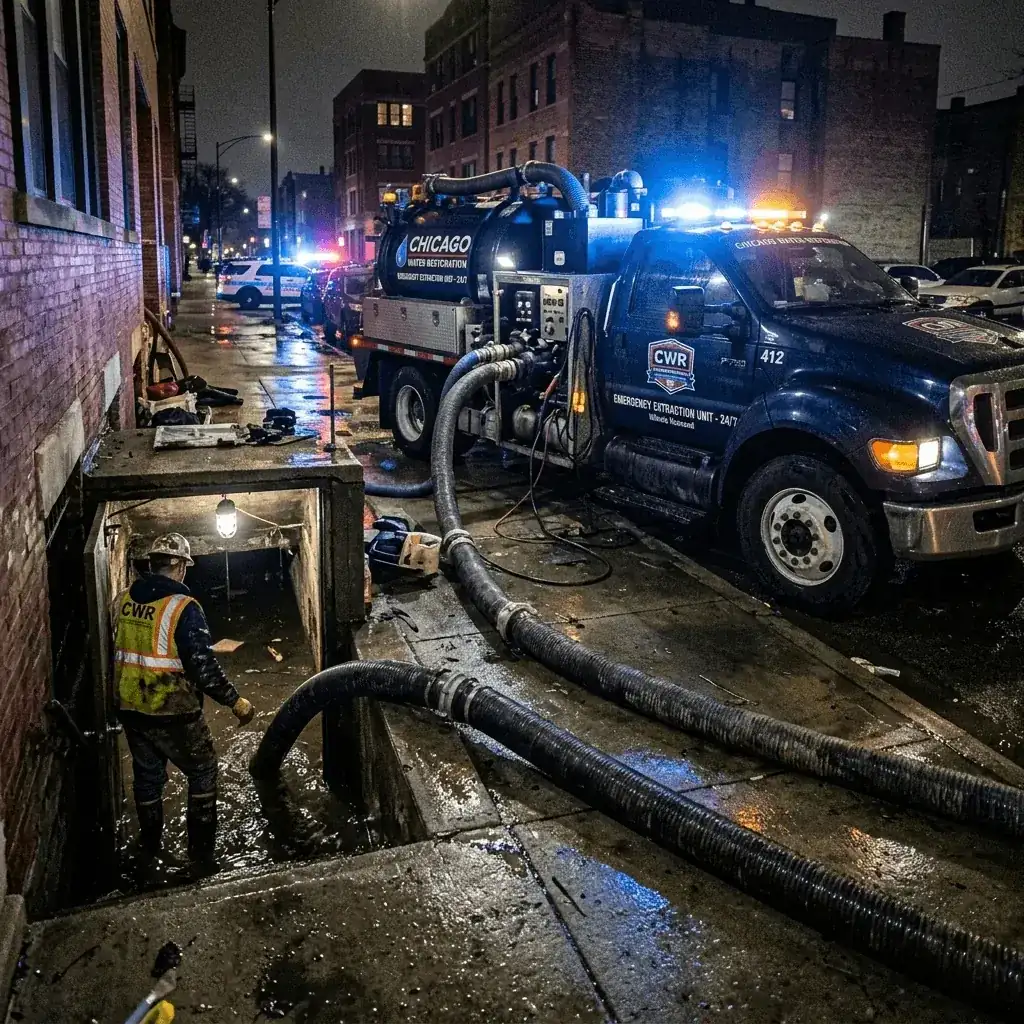
Chicago Basement Flood Cleanup & Water Removal
When your Chicago basement floods from heavy rain, a failed sump pump, groundwater, or a plumbing issue, our emergency crews can remove standing water, dry affected areas, and help prevent further damage across Cook County.
Why Chicago Basements Flood
Chicago's geographic location, dense clay soil, aging combined sewers, and extreme seasonal storms make basements and garden apartments uniquely vulnerable to subterranean water intrusion.
Heavy Rain & Stormwater Surcharges
Intense Midwestern storms dump inches of rain in minutes, overwhelming municipal storm drains and street catch basins. Runoff pools around foundation perimeters and cascades into basement window wells, walkouts, and grade-level entries.
Sump Pump Failure & Power Outages
Severe thunderstorms frequently trigger electrical blackouts right when sump pumps are needed most. Mechanical burnout, stuck float switches, failed check valves, or clogged discharge lines allow sump pits to overflow in minutes.
Combined Municipal Sewer Backups
Most Chicago neighborhoods operate on combined sewer infrastructure where stormwater runoff and sanitary wastewater share the same trunk lines. Overloaded city mains create hydraulic pressure that forces raw sewage backward through basement gravity floor drains.
Groundwater Hydrostatic Pressure
Chicago sits atop dense, low-permeability glacial clay. Prolonged rain saturates the surrounding soil, creating immense hydrostatic water pressure that pushes groundwater up through the basement floor slab-to-wall cove joints and hairline concrete cracks.
Foundation Wall Cracks & Porous Masonry
Many historic Chicago bungalows and brownstones feature vintage limestone, brick, or poured concrete foundations. Over decades, mortar degrades and settlement cracks form, allowing pressurized groundwater to weep through masonry walls.
Plumbing & Appliance Failures
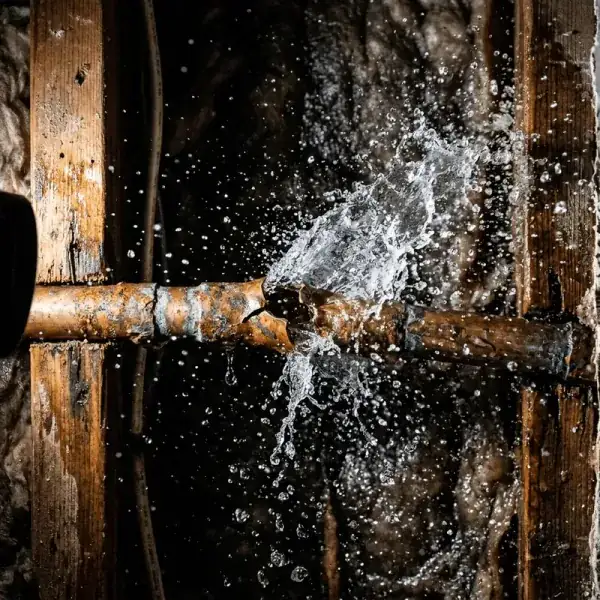
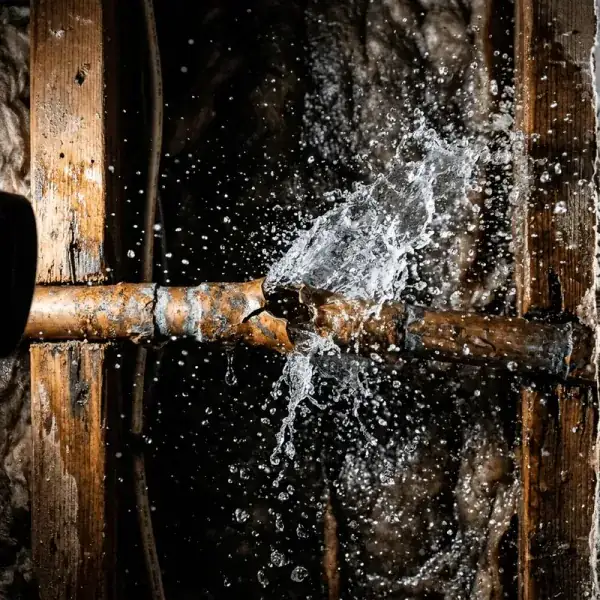
Basement water heaters, boilers, sump discharge check valves, and basement laundry supply lines can rupture without warning. An unaddressed 50-gallon water heater rupture or pressurized line burst can flood a basement under several inches of water in hours.
Our Basement Flood Cleanup Process in Chicago
Because standing floodwater penetrates porous concrete slabs, wall cavities, and framing, our certified teams follow an exact 7-step containment, extraction, and drying workflow.
Stage 01: Assess Flood Source & Water Category
Technicians identify where water entered, determine whether the flood is stormwater (Cat 1/2) or sewer backup (Cat 3 biohazard), and evaluate moisture penetration through slabs and baseboards.
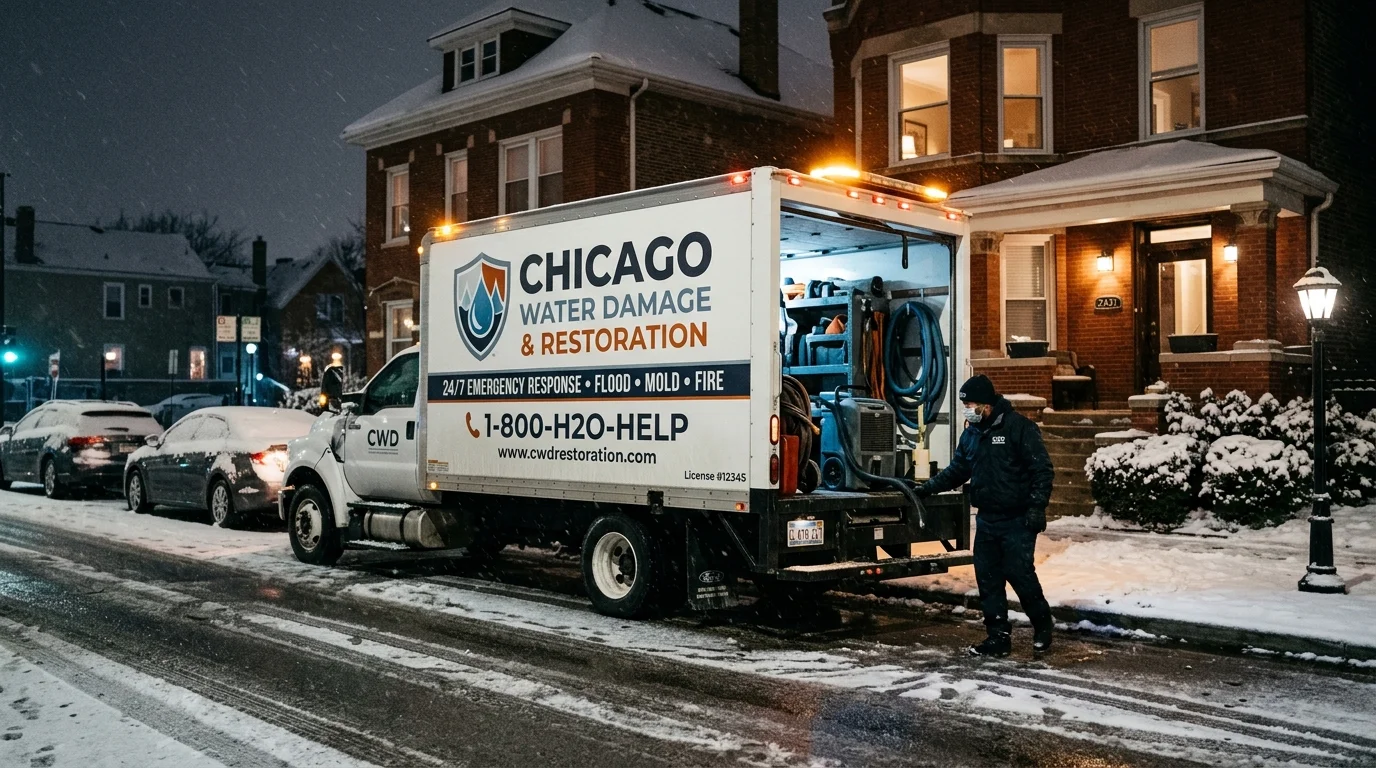
Stage 02: High-Volume Water Extraction
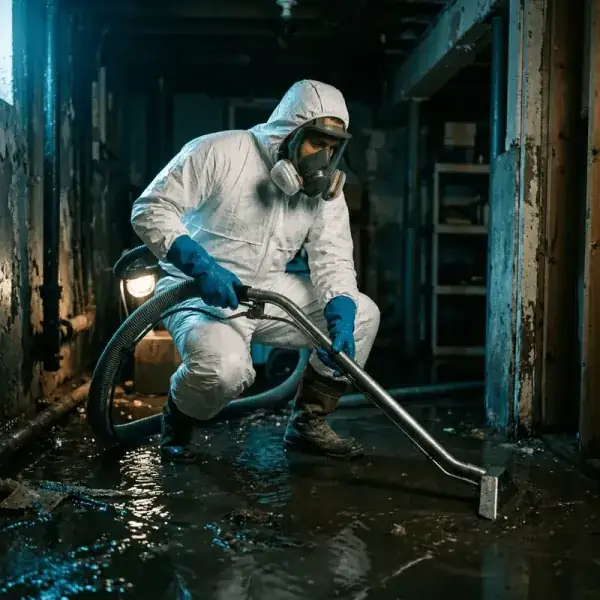
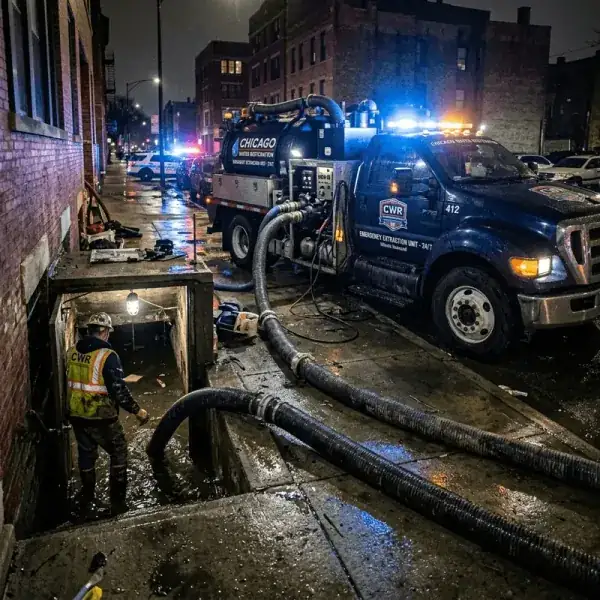
Industrial submersible trash pumps drain deep standing water, followed by truck-mounted extraction vacuums and weighted extraction units that pull water from concrete slabs and carpet piles.
Stage 03: Remove Damaged Materials
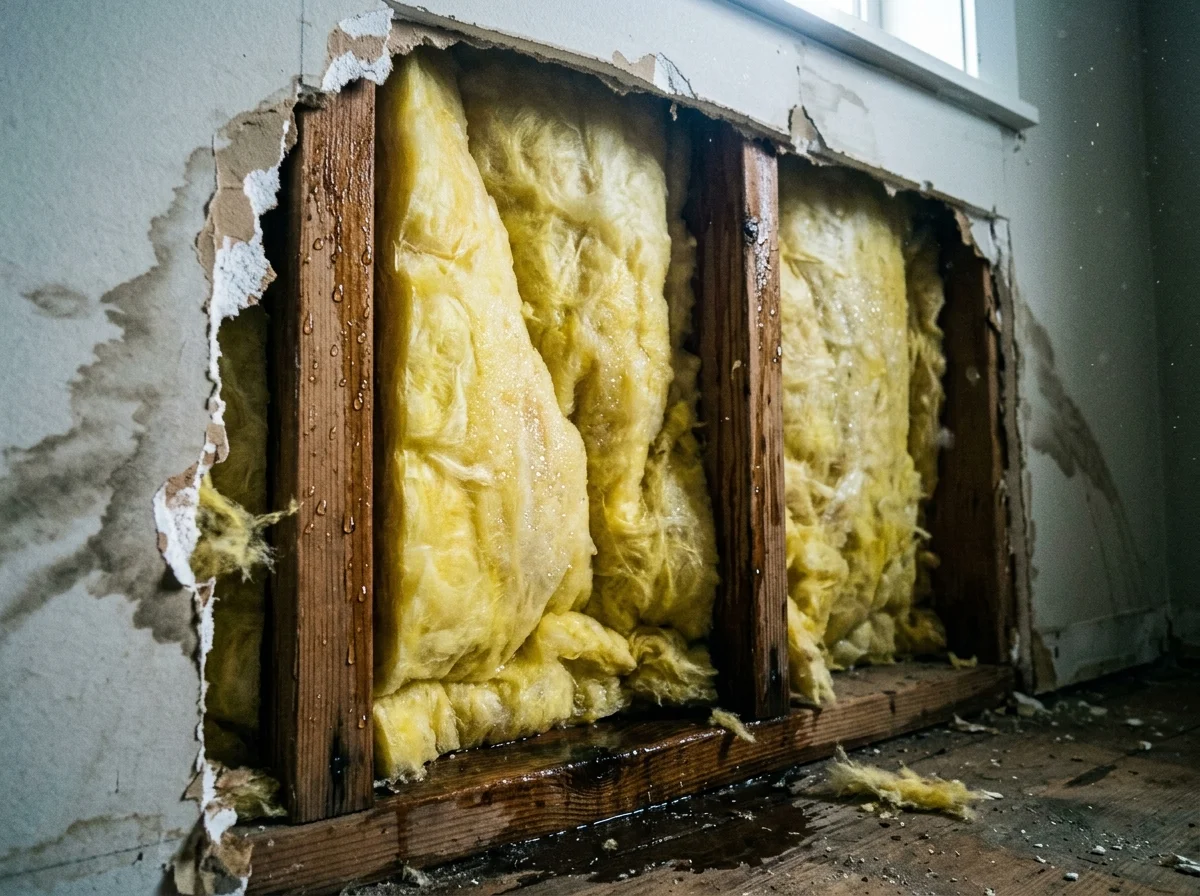
To prevent trapped moisture from rotting studs, technicians perform precision flood cuts on wet drywall (12–24" above waterline) and safely remove soaked fiberglass insulation and unsalvageable carpet padding.
Stage 04: Dry the Basement
Commercial Low Grain Refrigerant (LGR) dehumidifiers pull ambient humidity below 45% while high-velocity centrifugal air movers force pressurized airflow across floors and wall cavities to evaporate bound moisture.
Stage 05: Check for Hidden Moisture
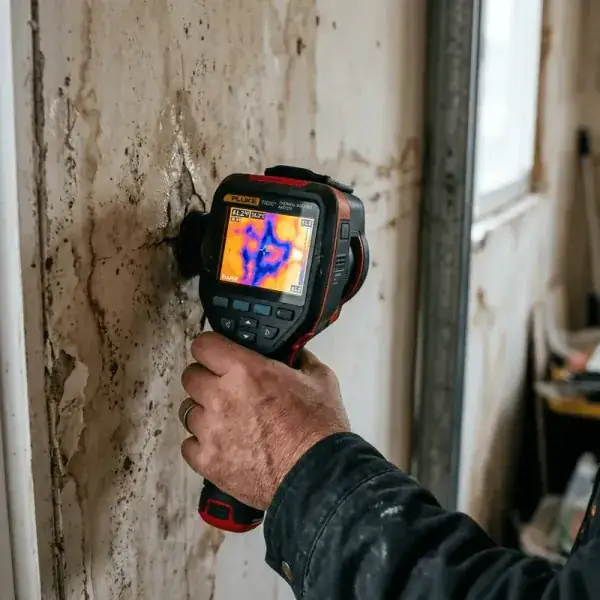
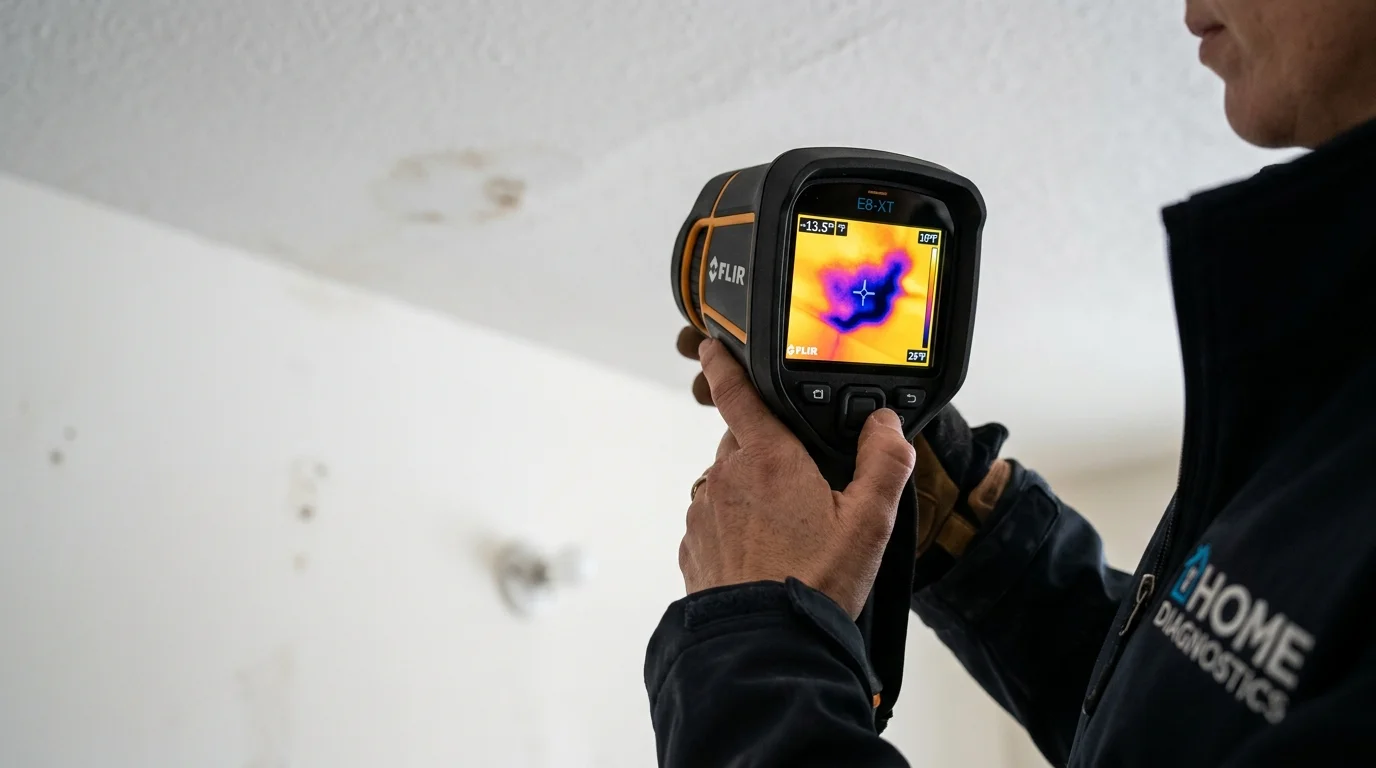
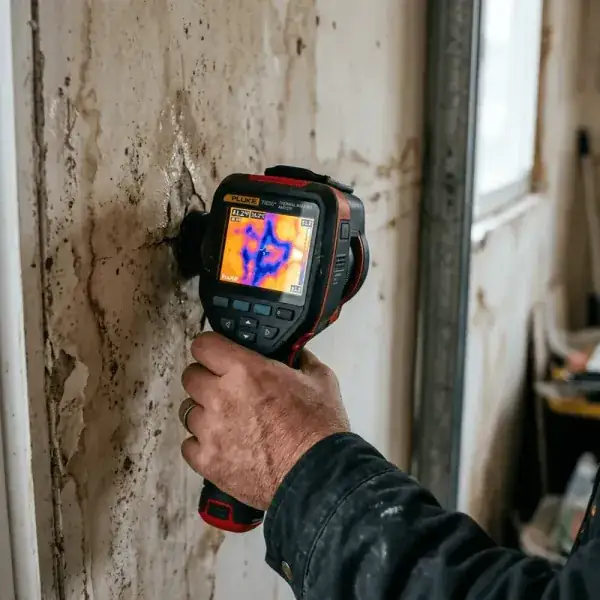
Using non-destructive FLIR infrared thermal cameras and calibrated pinless moisture meters, technicians locate cold moisture pockets trapped behind baseboards, under subfloors, and in foundation sill plates.
Stage 06: Clean and Sanitize
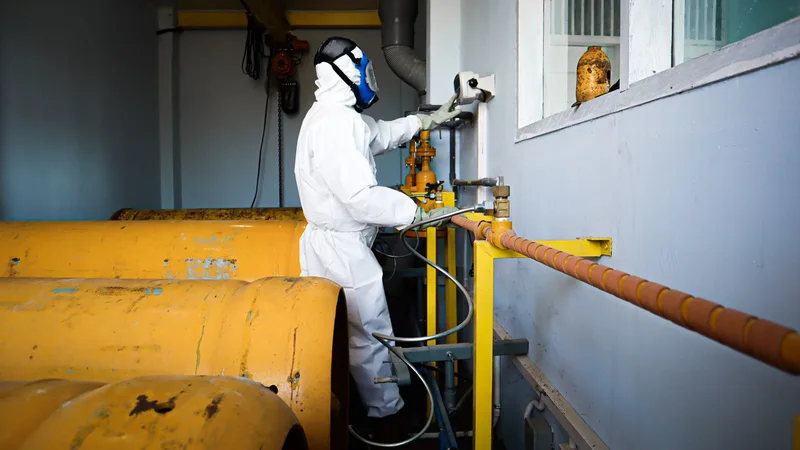
All exposed foundation walls, concrete slabs, and framing lumber are treated with broad-spectrum antimicrobial wash to neutralize mold spores, eliminate musty odors, and eradicate bacteria.
Stage 07: Document the Damage
Every stage is recorded with timestamped photos, thermal moisture readings, and itemized scope sheets to assist your insurance adjuster with the claim process.
Assess the Flood
Identify water source, test contamination category (stormwater vs sewage), and evaluate moisture penetration.
Remove Standing Water
High-capacity submersible trash pumps and truck-mounted extractors remove thousands of gallons per hour.
Remove Damaged Materials
Precision drywall flood cuts and disposal of soaked insulation/padding prevent mold in wall cavities.
Dry the Basement
Industrial LGR dehumidifiers and high-velocity air movers dry concrete slabs and framing lumber.
Check for Hidden Moisture
FLIR infrared thermal imaging and pinless moisture meters detect trapped water pockets.
Clean and Sanitize
EPA-registered antimicrobial wash applied to slabs and studs halts mold spores and odors.
Document the Damage
Timestamped photo logs and itemized scope documentation for insurance claims support.
Sump Pump Failure & Emergency Extraction
Your sump pump is your basement's primary defense against Chicago's high water tables and severe rainstorms. When a pump fails during a storm, hundreds of gallons of groundwater can flood your lower level in under an hour.
Without an auxiliary battery backup, primary electric pumps cease operating during severe weather blackouts.
Vibrations or pit debris can pin the mechanical float switch against the basin wall, preventing pump activation.
Exterior discharge lines can freeze during winter or become clogged with mud and mulch, causing water to back up.
Continuous pumping during multi-day rain events can overheat and burn out aging sump pump motors.
How Our Response Crews Resolve Sump Emergencies:
We deploy commercial auxiliary submersible pumps directly into your sump pit to drain standing water immediately. Once the water is extracted, we deploy structural drying systems and inspect your pit, providing referrals to licensed plumbing specialists for permanent pump replacement or battery-backup installation if needed.
24/7 Sump Pump Rapid Dispatch
Citywide Chicago & Cook County
Don't let a dead sump pump ruin your finished basement. Our mobile units arrive equipped with independent auxiliary power, submersible drainage rigs, and heavy-duty water extractors.
What to Do When Your Basement Floods
Basement flooding presents immediate electrocution and structural hazards. Take these 6 immediate precautions before cleanup crews arrive:
Stay Out of Standing Water
Never walk into a flooded basement if electrical outlets, cords, water heaters, or circuit panels are touching the water. Water conducts electricity and creates a deadly shock hazard.
Shut Off Electricity Safely
If your main electrical panel is upstairs or in a completely dry, safely accessible location, switch off the breaker to the basement circuit. If the panel is in the basement, do not approach it.
Stop the Water Source
If the flood is caused by a ruptured interior water pipe, water heater, or washing machine hose, turn off your home's main water shutoff valve immediately to halt incoming pressure.
Elevate Valuables & Furnishings
If safe to enter with rubber boots, move documents, family photo albums, electronics, area rugs, and upholstered furniture out of the water path to prevent irreversible contamination.
Avoid Household Shop-Vacs
Never use standard consumer vacuum cleaners or extension cords in standing water. They lack electrical grounding and industrial volume capacity, creating extreme shock and fire risks.
Call Emergency Dispatch
Contact professional extraction crews right away. Water extraction must begin within the first 24 to 48 hours to halt mold growth and salvage drywall, structural studs, and subfloors.
Can a Flooded Basement Be Restored?
Not every waterlogged material needs demolition. Salvageability depends heavily on the water category (clean storm vs blackwater sewage), exposure duration, and how quickly extraction begins:
Concrete Slabs & Masonry Walls
100% SalvageablePoured concrete and brick foundations are non-porous structural elements. They do not rot, but they absorb moisture that evaporates into the air. With extraction, power washing, and antimicrobial fogging, they are fully restored.
Finished Drywall & Insulation
Partial RemovalGypsum drywall wicks moisture upward. If wet for >24 hours or exposed to contaminated water, a precision flood cut (12–24" above waterline) is performed to expose and dry the framing studs while saving the upper wall.
Carpeting & Carpet Padding
Padding ReplacedFoam padding acts like a sponge and cannot be effectively sanitized once submerged. The padding is removed, while synthetic carpet exposed to clean stormwater can often be cleaned, disinfected, and re-stretched.
Hardwood & Laminate Flooring
Time-SensitiveSolid wood floors can often be salvaged without tear-out if specialized negative-pressure Injectidry vacuum floor mats are applied within 24–48 hours. Particle-board laminate generally swells permanently and requires replacement.
Wall Studs & Floor Joists
100% SalvageableSolid 2x4 and 2x6 framing lumber can withstand temporary flood exposure if dried thoroughly before wood-decay fungi develop. Antimicrobial washes are applied directly to studs to prevent surface mold.
Furniture & Basement Appliances
Item InspectionSolid wood furniture, metal shelving, and non-porous items can be sanitized. Water heaters, washers, and dryers submerged past electrical components must be inspected by a technician before being safely re-energized.
Was Your Basement Flooded by Rain or Sewage?
The safety protocols and cleanup procedures differ dramatically depending on whether water entered from groundwater/storm runoff or backflowed through sanitary sewer lines:
Rainwater & Groundwater Seepage
Water entering from window wells, foundation cove joints, roof drainage, or fresh plumbing supply lines. While non-toxic initially, standing stormwater rapidly degrades into Category 2 graywater after 24 hours.
- Primary Goal: Rapid water extraction & moisture control
- LGR industrial dehumidification halts mold within 24–48h
- EPA antimicrobial wash applied to floor slab and studs
Combined Sewer Floor Drain Backup
Water bubbling up through basement floor drains, toilets, or laundry sinks during storms. Contains human pathogens, E. coli, Salmonella, viruses, and airborne bioaerosols requiring certified containment.
- Mandatory full PPE protective gear and containment zones
- Unsalvageable saturated porous contents must be disposed of
- Hospital-grade antimicrobial sterilization & HEPA scrubbing
Insurance Documentation & Claims Support
Dealing with water damage can be stressful. Depending on the independent provider you are connected with, insurance-related support may include comprehensive moisture mapping logs, photographic damage records, and itemized scope documentation to help with your claim filing. Insurance coverage, deductibles, and billing arrangements vary by provider and policy terms.
Serving All Chicago Neighborhoods & Suburbs 24/7
Our rapid response vehicles are strategically staged across Cook County, DuPage County, and Lake County for targeted arrival within 45 to 60 minutes of your call.
Frequently Asked Emergency Questions
What causes basement flooding in Chicago?▾
Chicago basements flood primarily due to aging combined municipal sewer mains that surcharge during heavy rainstorms, sump pump mechanical or power failures, high water tables exerting hydrostatic groundwater pressure through foundation floor joints, and interior plumbing failures such as ruptured water heater tanks or washing machine hoses.
What should I do immediately if my basement floods?▾
- Stay out of standing water if electricity, outlets, or extension cords may be submerged (electrocution hazard).
- Shut off electricity at the main breaker box only if safely accessible from a dry, dry-footed location.
- Stop the water source if safe to do so (shut off your property's main water valve for plumbing leaks).
- Move valuables, furniture, and boxes to upper floors away from standing water.
- Never use a standard household vacuum or extension cords in standing floodwater.
- Call 24/7 emergency dispatch immediately for professional extraction before mold develops.
How quickly should flooded basement water be removed?▾
Water extraction must begin within the critical 24 to 48-hour window. After 48 hours of standing moisture and elevated relative humidity, microbial amplification (black mold) begins rapidly colonizing porous building materials like drywall, baseboards, and subfloors.
Can a finished basement with drywall and carpet be restored?▾
Yes, in many cases! Structural concrete slabs, framing studs, and intact flooring can often be restored if rapid extraction and industrial LGR dehumidification start within 24 to 48 hours.
Wet drywall typically receives a precision flood cut 12 to 24 inches above the moisture line to dry wall cavities. Carpets exposed to clean stormwater can frequently be sanitized, while saturated porous carpet padding is usually replaced.
What should I do if my sump pump stopped working during a storm?▾
If your sump pump motor burns out, the float switch jams, or a thunderstorm knocks out power, call emergency dispatch right away. Response crews arrive with high-volume submersible trash pumps and truck-mounted vacuum extractors to empty your basement sump pit and floor before permanent structural or foundation damage occurs.
Does basement flooding cause toxic black mold?▾
Basement flooding creates an ideal environment for mold spores to germinate on organic materials (wood framing, drywall paper, carpeting) within 24 to 48 hours if indoor relative humidity exceeds 60%. Professional drying pairs high-velocity centrifugal air movers with Low Grain Refrigerant (LGR) dehumidifiers and EPA-registered antimicrobial washes to halt fungal spores.
What if the basement floodwater contains sewage or smells foul?▾
If water backs up through basement floor drains or plumbing fixtures, it is classified as Category 3 Blackwater (Biohazard) containing dangerous bacteria (E. coli, Salmonella) and pathogens. Avoid all contact, isolate the area, and request specialized sewage backup cleanup with biohazard containment and hospital-grade sanitization.
Does homeowners insurance cover basement flood cleanup?▾
Coverage depends on the water source and your policy endorsements. Sudden internal plumbing bursts are generally covered under standard policies. Sump pump failure and sewer drain backups typically require an optional Water Backup of Sewer or Drain endorsement. Technicians assist your claim by providing timestamped photos, thermal FLIR moisture logs, and itemized scope documentation.
Our Other Services
Chicago's full-spectrum water emergency response — drag or swipe to explore every service we dispatch.
Is Your Chicago Basement Flooding Right Now?
Don't wait for mold spores to colonize your walls or foundation. Connect with local dispatchers now for rapid 30 to 60-minute emergency pump-out and drying across Chicago.
Available 24 Hours • 7 Days a Week • 365 Days a Year • Citywide Cook County Dispatch